A local promo deadline can make or break a small business’s slow season. You’ve seen it before: a coffee shop posts “50% off this weekend only” and the line stretches out the door, while the same discount posted with no end date barely gets a click.
That difference isn’t just luck. A limited-time offer works because it changes how a customer’s brain weighs the decision to buy right now versus buy later.

This guide breaks down how to build a local offer that actually moves people to act, without training your customers to wait for the next discount. You’ll learn how to pick the right promotional campaign structure and package it into a client-ready presentation.
You’ll also see how to spread the message across email, your site, and retargeting without losing consistency. The goal is a repeatable marketing strategy your agency or business can run every month, for every client, without starting from scratch each time.
Key Takeaways
- Time pressure works best when it feels honest and tied to a real local moment, not manufactured hype.
- Matching the promo type to the business goal protects profit while still growing sales.
- A visual, reusable campaign package makes it faster to launch offers across email, web, and ads without losing brand consistency.
Why Time-Bound Promotions Move Customers to Act
A limited-time offer changes the math in a customer’s head. Instead of “I’ll buy this eventually,” the brain shifts to “I need to decide now or lose the deal.”
That shift is rooted in basic psychology, and it shows up again and again in local retail, restaurants, and service businesses.
Urgency, Scarcity, and Fear of Missing Out
Urgency and scarcity are not the same thing, though people often mix them up. Urgency is about time, like a deadline that closes at midnight.
Scarcity is about supply, like only 20 units left in stock. Both trigger fear of missing out, but they work through slightly different paths in the brain.
A deadline says “act now or lose the price.” Limited supply says “act now or lose the item entirely.”
Combining both, such as a limited-time sale on a limited supply of seasonal inventory, tends to produce the strongest response because it stacks two separate pressures at once.
When a Deadline Helps Rather Than Pressures
A good deadline respects the customer’s time instead of tricking them. If a local bakery runs a three-day limited-time deal on holiday pies, the customer can plan around it.
That is different from a fake countdown that resets every time someone visits the site. The best limited-time deals feel like a genuine perk tied to a real reason, like a seasonal ingredient running out or a slow week the business wants to fill.
When customers sense the deadline is real, they trust the brand more, not less. That trust carries into the overall customer experience and keeps people coming back after the sale ends.
Local Buying Moments That Create Natural Relevance
Local businesses have an advantage that big national brands do not always have: proximity to real community moments. Holidays, school schedules, and local events all create natural windows for seasonal promotions.
A florist near a college town might build a Valentine’s Day push around exam week stress relief. A local gym might tie a January offer to New Year resolutions instead of a generic percentage-off sale.
These seasonal offers feel less like marketing and more like the business paying attention to its neighborhood. That’s exactly the kind of relevance that makes a limited-time sale convert.
Set the Offer Goal, Audience, and Economics
Every promotional campaign should start with a number, not a discount idea. Before writing a single word of copy, decide whether the goal is to increase sales this month, drive customer acquisition, boost average order value, or clear slow-moving inventory.
Each goal points to a different offer type and audience.
Match the Incentive to the Business Objective
A free trial or introductory pricing works well for SaaS products and subscription services because the goal is to get someone using the product long enough to see value. A first-purchase discount works for e-commerce brands trying to convert window shoppers into buyers.
A clearance sale or inventory clearance event makes sense for a retailer sitting on slow-moving stock ahead of a new product launch. Matching the incentive to the objective keeps the offer honest.
A gym offering a discount to increase repeat purchases from existing members needs a different structure than a gym trying to win brand-new customers off a Google search.
Segment New, Returning, and High-Intent Customers
Not every customer should see the same offer. New customers often respond well to a simple first-purchase discount, since they have no history with the brand yet.
Returning customers respond better to loyalty-style perks that reward them for repeat purchases. High-intent customers, like people who abandoned a cart or joined a pre-orders waitlist, often just need a small nudge to finish the purchase.
Personalization does not require expensive software for a local business. Even a simple email split—one message for first-time visitors and another for repeat buyers—can improve results without adding much work.
Protect Margin While Targeting Revenue Growth
Revenue growth means nothing if the discount eats the entire margin. Before setting a percentage off, calculate the breakeven point: how many extra units need to sell to make the promo worth running.
This matters even more for businesses tracking return on investment closely. A poorly priced promo can post strong sales numbers while actually losing money.
A helpful habit is comparing this year’s promo results against last year’s same period. That comparison shows whether the offer actually grew the business or just pulled forward sales that would have happened anyway.
Select a Promotion Structure Customers Understand
Customers respond fastest to offers they can understand in about three seconds. If someone has to do math or read fine print to figure out what they are getting, the offer has already lost momentum.
Discounts, Discount Codes, and Sitewide Sales
A straightforward discount code or coupon code remains the easiest promo type for most local businesses to run. It requires no complicated setup and customers already know how it works.
A sitewide sale works well for clearing broad inventory, while limited-time discounts on specific categories work better for pushing a particular product line or new arrival. BOGO offers (buy one, get one) tend to perform well for businesses with healthy margins on individual items, since the customer feels like they are getting a bonus rather than a straight price cut.
Value-Add Incentives That Preserve Price Positioning
Not every promo needs to lower the price. Free shipping, a free gift, or a gift with purchase can drive the same urgency without training customers to expect discounts.
A free gift with purchase also tends to protect brand image better than a steep percentage-off, since the sticker price stays intact. A mystery discount, where the customer doesn’t know the exact deal until checkout, adds a bit of game-like fun and tends to boost curiosity-driven clicks, especially on email and social.
Flash, Seasonal, and Early-Access Campaigns
A flash sale creates the sharpest urgency because the window is short, often just a few hours or one day. Daily deals work well for businesses with frequent inventory turnover.
Early access rewards loyal customers by letting them shop before the general public, which builds goodwill without giving away margin. Here’s a quick reference for common limited-time offer examples and when they tend to work best:
| Promotion Type | Best For | Watch Out For |
|---|---|---|
| Flash sale | Quick inventory clearance, slow days | Customer burnout if run too often |
| BOGO | Retail with healthy per-unit margin | Confusing terms and conditions |
| Free gift with purchase | Preserving brand price positioning | Gift cost eating into profit |
| Early access | Rewarding loyal or high-intent customers | Feeling exclusive only to a small list |
| Seasonal clearance | Post-holiday or end-of-season inventory | Steep markdowns hurting perceived value |
Black Friday and Cyber Monday remain the biggest annual moments for limited time promotion activity. But a smart local business builds its own smaller version of that energy around dates that matter to its specific community, not just the national retail calendar.
Package the Client Campaign Into a Clear Visual System
A great limited-time offer idea can still fail if it looks messy or inconsistent across channels. Agencies and local businesses need one visual system that carries the offer from the internal pitch deck all the way through the landing page, popups, and ads.
Create an Approval-Ready Offer Brief
Before building anything, put the offer details into a clean, one-page brief: the discount or incentive, the dates, the target audience, and the expected outcome. This brief becomes the reference point for the client and every team member touching the campaign.
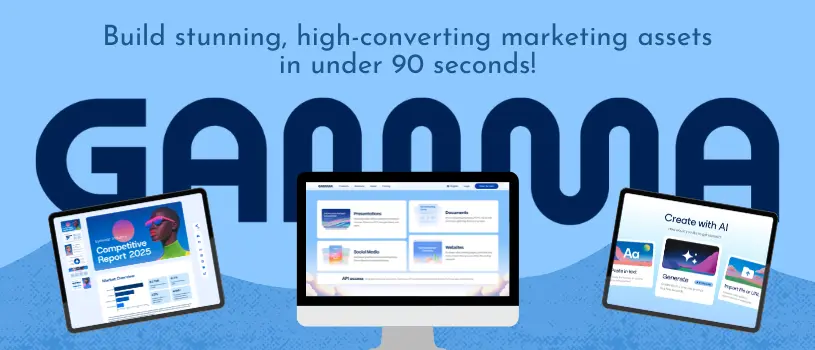
Tools like Gamma’s presentation and website builder make this step fast. A brief can be turned into a polished, on-brand document in minutes instead of hours spent formatting slides.
That speed matters most when a local agency is running several client campaigns at once and can’t afford to rebuild a template from scratch every time.
Map the Landing Page and Conversion Path
Every promo needs a home base, usually a landing page built specifically for that offer instead of a generic homepage. The path should be simple: customer sees the ad or email, lands on a page that repeats the same offer language, then clicks one clear CTA to buy or claim the deal.
If the business runs on Shopify or another online store platform, the landing page should link directly to a pre-filtered collection or cart with the discount code already applied when possible. Reducing friction between the click and the purchase is one of the highest-leverage moves in the entire campaign.
Turn Core Messaging Into Reusable Client Assets
Once the offer language and visuals are locked, turn them into a small library of reusable pieces: social graphics, email banners, a countdown timer graphic, and a one-pager for influencer partnerships if the campaign includes them. This library saves time on the next promo, since the brand system is already built and only the offer details need to change.
This is also where brand awareness and short-term sales goals meet. A well-packaged campaign does more than sell today’s deal—it reinforces what the business stands for every time a customer sees it.
Coordinate Promotion Messaging Across Every Touchpoint
A limited-time offer campaign loses power the moment its message changes between channels. If the email says “48 hours left” but the website popup says nothing about a deadline, customers get confused and trust drops.
Use Email Campaigns to Build Anticipation and Close the Window
An email marketing campaign works best as a three-part sequence: a teaser before the sale starts, a launch email once it opens, and a final reminder as the deadline closes. Email subject lines should state the deadline plainly, since vague subject lines get skipped in a crowded inbox.
A flash sale email benefits from a visible countdown timer inside the email itself, since some email clients render these dynamically and the moving numbers catch attention. Platforms like Klaviyo make this kind of automation simple to set up once, then reuse for future campaigns with new dates and offer details.
Convert Active Visitors With On-Site Messages
Website popups and site messages catch people while they are already browsing, which is a different moment than an email sitting in an inbox. A well-timed popup showing the same offer and deadline as the email keeps the message consistent and reminds visitors the clock really is running.
An exit-intent popup, which appears right as someone is about to leave the site, works well as a last chance to capture attention before losing the visitor entirely. Keep the CTA short and repeat the same discount code shown everywhere else in the campaign.
Recover High-Intent Shoppers Before Expiration
Cart abandonment emails and retargeting campaigns exist to catch people who almost bought but didn’t finish. During a limited-time sale, these messages need extra urgency, since the whole point of the offer disappears once the deadline passes.
A simple two-email cart abandonment sequence—one gentle reminder and one final “offer ends tonight” nudge—tends to recover a meaningful share of otherwise lost sales. Pairing that sequence with a retargeting ad showing the same countdown timer keeps the pressure consistent across paid and owned channels.
Measure Results, Learn, and Preserve Customer Trust
A limited-time offer is only as good as what it teaches the business for next time. Tracking the right numbers, testing small changes, and avoiding fake urgency all protect both short-term revenue and long-term customer trust.
Track Conversion, Revenue, and Acquisition Quality
Conversion rate and ROAS show if the promo worked financially, but they don’t tell the whole story. Look at customer acquisition quality too—did the offer attract one-time bargain hunters, or people likely to become repeat customers?
Average order value is another important number to watch. Some promo types, like BOGO, can boost order size even if the discount lowers per-item revenue.
Comparing this campaign’s numbers to a past campaign or the same period last year gives you a much clearer picture of real revenue growth.
Run A/B Tests on Value, Timing, and Creative
Small tests can reveal a lot before you go all-in on one version of an offer. Try testing one variable at a time—the discount amount, the deadline length, or even the email subject line—so you actually know what made the difference.
A/B testing doesn’t have to be complicated, even for a local business. You can send two subject lines to a small email segment first, then send the winner to your full list. It’s a simple trick that even the big companies use!
Avoid False Scarcity and Discount Dependence
Customers notice when a “limited-time” sale runs every single week. Once that pattern is spotted, the urgency stops working.
The business risks looking dishonest, which can hurt the customer experience even after the sale ends. Real scarcity and honest deadlines protect brand trust much better than constant discounting.
Here’s a handy tip: if you’d feel embarrassed explaining the same offer to a loyal customer, it’s probably not a good idea to run it!