A local business owner has heard a lot of pitches before yours. Maybe a software rep promised more customers.
Maybe a marketing agency swore up and down that their plan would double revenue. Most of those promises fell flat, and now you’re standing in front of someone who has learned to be careful with their money.

Getting a skeptical shop owner, contractor, or restaurant manager to say yes takes more than a good speech. It takes proof they can see and understand in seconds, not slides packed with jargon they have to decode.
The fastest way to earn trust is to show real numbers in a clear visual format that connects directly to their bottom line. This article walks through how to build that kind of pitch, and how tools like Gamma make the process faster without sacrificing accuracy or polish.
Key Takeaways
- Skeptical local business owners respond better to clear, specific numbers than to big promises.
- A strong ROI pitch starts with the owner’s actual baseline, not generic industry averages.
- Visual storytelling and easy-to-share formats help business owners feel confident saying yes.
Why Local Business Owners Question ROI Claims
Local business owners have tight budgets and even tighter schedules. They’ve likely sat through sales teams and founders pitching big growth numbers that never showed up in their bank account.
Before you show a single chart, you need to understand why they’re guarded and what will actually change their mind.
Trust, Cash Flow, And Operational Risk
Most local business owners run on thin margins. A bad investment doesn’t just sting, it can mean missing payroll or delaying a supplier payment.
That’s why they weigh every pitch against cash flow first, not against the excitement of a new idea. They’ve also seen startups and even other founders overpromise during an investor pitch or sales call.
If your numbers feel inflated or vague, they’ll assume you’re doing the same thing to them. Trust builds slowly, and it builds through specifics, not enthusiasm.
Why Generic Growth Projections Fail To Persuade
A slide that says “grow revenue by 30%” means nothing without context. Local owners want to know: 30% of what, over what time, and based on what assumption?
Generic benchmarks pulled from industry reports also fall flat because every local business is different. A hardware store in a small town doesn’t operate like a boutique gym in a city center.
Owners can spot a copy-paste pitch immediately, and it kills credibility fast.
The Difference Between Interest And Buy-In
Interest is polite nodding. Buy-in is when the owner starts asking about timelines and payment terms.
That shift happens when the numbers feel personal and the risk feels small. Getting there means moving past a general pitch and building a case around their actual business, not a hypothetical one.
Build An ROI Case Around Business Inputs That Matter
A strong ROI case starts with real numbers from the business itself, not assumptions borrowed from a template. Pulling from their current analytics, sales history, and expenses gives you a foundation that’s hard to argue with.
It also sets up the rest of your client proposals and content creation to feel grounded rather than speculative.
Establish The Current Baseline
Before you can show growth, you need to show where things stand today. Ask for basic numbers: average monthly revenue, current customer count, cost per lead if they track it, and any recent marketing spend.
If they don’t have exact figures, work with reasonable estimates and say so clearly. This baseline becomes your anchor point.
Every projection you show later should trace back to this starting number, so the owner can see the math instead of just trusting your word.
Connect Activities To Measurable Outcomes
Every recommendation you make should tie to a specific outcome. If you’re proposing a new website, tie it to expected lead volume based on their current traffic.
If you’re proposing a marketing plan, tie it to expected customer visits based on past campaign performance. Vague activities like “improve branding” won’t land.
Owners want to see a straight line between what they pay for and what changes in their business.
Use Conservative Assumptions And Clear Payback Logic
Skip the best-case scenario. Show the number you’d bet your own money on, and explain how you got there.
If a $2,000 investment saves 10 hours a month in labor, show the hourly cost and the math behind the payback period. A simple payback timeline, even a rough one, does more to build confidence than a chart full of upward-trending lines with no explanation behind them.
Turn Financial Evidence Into A Clear Visual Narrative
Numbers alone don’t move people, but numbers wrapped in a clear story do. Good storytelling paired with the right charts and infographics turns a spreadsheet into something a busy owner can understand in under a minute.
Whether it lives in a full pitch deck or a single slide layout, clarity is key.
Structure The Story From Problem To Payback
Start with the problem the owner already knows they have, like slow foot traffic or missed calls. Then walk through your solution, the cost, and the expected return, ending with a clear payback point.
This order matches how people naturally think through a decision, so it feels familiar instead of forced. Avoid jumping straight to solutions.
If the owner doesn’t feel understood first, the numbers that follow won’t land the same way.
Choose Charts That Make Trade-Offs Obvious
A simple bar chart comparing “current cost” to “projected cost” says more than three paragraphs of text. Line charts work well for showing growth over time, while side-by-side comparisons work best for showing before-and-after scenarios.
Keep each chart focused on one idea. A chart trying to show five metrics at once usually confuses more than it clarifies, especially for someone who isn’t used to reading financial reports.
Make The Next Step Feel Low Risk
End your pitch decks with a clear, small first step rather than a big commitment. A trial period, a smaller starter package, or a 30-day check-in point all lower the pressure of saying yes.
Owners are far more likely to move forward when the first step feels reversible.
Create And Refine The ROI Pitch Efficiently
Building a polished ROI pitch used to mean hours in a design tool, moving text boxes and resizing charts by hand. An ai presentation builder speeds up that process significantly, letting you focus on the numbers and the story instead of formatting.
Start With A Specific Audience-And-Outcome Brief
Before typing anything into an ai presentation maker, write one or two sentences describing who you’re pitching and what you want them to decide. For example, “A local bakery owner deciding whether to invest $1,500 in a new website” gives an ai-powered presentation platform much better direction than a vague topic line.
The more specific your brief, the less editing you’ll need to do later. This step takes five minutes and saves much more time down the line.
Convert Notes, Spreadsheets, And Documents Into A Draft
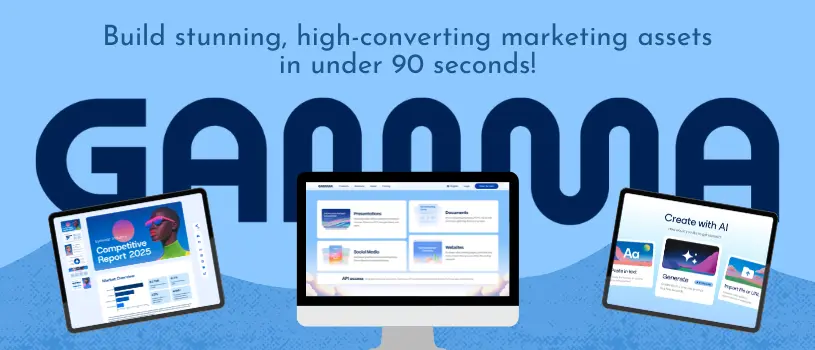
Gamma can take rough notes, spreadsheet numbers, or an existing document and turn them into a structured first draft with charts and layouts already in place. Instead of starting from a blank page, you’re editing a presentation that already has a logical flow from problem to payback.
You can paste in your baseline numbers and payback math, and the tool handles the automated design work around it.
Keep Brand And Messaging Consistent During Revisions
A brand kit keeps your gamma branding, colors, and fonts consistent across every version of the pitch, even as you revise numbers or swap out charts. This matters for local business pitches because owners often ask for a follow-up version after their bookkeeper reviews it.
Built-in access to image libraries like Unsplash and Giphy also helps you add relevant visuals quickly without leaving your presentation workflow to search for stock photos elsewhere. You can try building your first draft at litlink.us/gamma to see how quickly a rough idea turns into a shareable pitch.
Share A Proposal That Supports Deliberate Decisions
Local business owners rarely make decisions on the spot. Most want to think it over, check with a partner, or run the numbers past their accountant.
How you share the pitch after the meeting matters almost as much as the pitch itself.
Use Live Links For Accessible Review
Instead of emailing a PDF export or a PowerPoint file, share a live link the owner can open on their phone or laptop. This format works better than static files because it loads fast and looks the same on any device.
A live link also means you can update numbers after the meeting without sending a whole new file. If the owner asks for a revised payback timeline, you edit the same link instead of starting a new email thread.
Gather Feedback Without Version Confusion
Real-time collaboration and comments let the owner, their partner, or their accountant leave notes directly on the pitch. This avoids the classic problem of five different versions floating around in email.
Everyone sees the same live version, which cuts down on confusion about which numbers are current.
Track Engagement And Prepare For Follow-Up Questions
Analytics built into the sharing link show you whether the owner actually opened the pitch. You can also see how long they spent on each page and which sections they revisited.
This gives you a sneak peek at what they’re really interested in before your follow-up call. If they spent extra time on the payback slide, that’s likely where their questions will come from.
Walking into that follow-up already knowing their concerns puts you in a much stronger position to close the deal.