That 5-page PDF sitting in your local lead generation funnel might be costing you more leads than you think. Most local business owners still hand out ebooks, checklists, or downloadable guides in exchange for an email address.
But then, they watch their conversion rate stall at 1-2%. The problem isn’t the offer itself—it’s the format.

People today expect answers, not homework. A short, interactive experience that gives someone a personalized result on the spot will almost always beat a static document that asks for their time upfront.
This shift matters even more for local businesses, where a potential customer down the street has plenty of other options a quick search away. Interactive lead magnets, built as simple, mobile-friendly cards, give local marketers a faster path from stranger to lead.
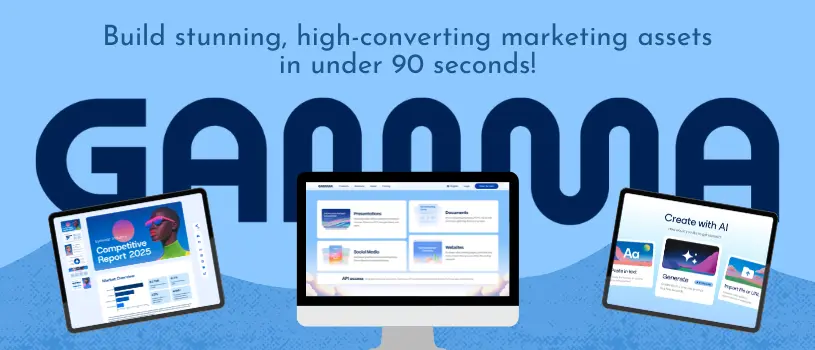
Tools like Gamma make this approachable even without design or coding skills. Let’s dive in and see how you can level up your lead gen game!
Key Takeaways
- Static PDFs feel like extra work, while interactive tools give instant, personal answers that people trade their email for.
- Local businesses see stronger results from quizzes, calculators, or assessments that match a customer’s specific need, budget, or timing.
- The best local lead magnets combine smart questions, quick results, and a clear next step, all wrapped in a clean, on-brand design.
Why Static PDFs Lose Local Prospects
PDF lead magnets like whitepapers, ebooks, guides, checklists, and templates were the default choice for years. But for a lot of local businesses, gated PDFs quietly fail to deliver the leads owners expect.
The problem is not effort, it’s the mismatch between what people want and what a long document actually offers.
The Delayed Value Problem Behind Gated PDFs
When someone sees “download our 20-page guide,” their brain runs a quick cost-benefit check. Is this worth typing in my email address?
Most people decide it’s not worth the risk right now, even if the content looks useful. A PDF asks for payment (an email) before it delivers any real value.
The reader has to download it, open it, and actually read it before they get anything out of it. That gap between the ask and the payoff is where most local prospects drop off.
Perceived value drops fast when the reward is delayed.
How ChatGPT And Claude Raise Expectations For Free Content
Tools like ChatGPT and Claude have changed what people expect from “free” content. Anyone can generate a decent guide, checklist, or explainer in seconds using an AI chatbot.
A generic PDF no longer feels special or scarce. If a visitor can get similar information from a quick AI prompt, they have less reason to trade their email for your long-form content.
Local businesses now need to offer something a chatbot can’t replicate: a personalized result based on that visitor’s specific situation, location, or need.
When PDF Lead Magnets Still Serve A Purpose
PDFs aren’t dead—they just work better in a different role. A well-written guide or checklist can still pull in search traffic and build trust as top-of-funnel content.
Think of PDFs as a tool for getting found on Google, not for collecting emails. Save the interactive experience for the actual email exchange.
That combination—informative content for visibility and an interactive card for conversion—tends to outperform either one alone.
What Makes An Interactive Card Worth An Email Address
Interactive content earns an email address by giving something in return right away. Instead of a wall of text, a good interactive tool asks a few quick questions and hands back personalized results the visitor can actually use.
Immediate Answers To A Specific Problem
Local customers usually have one clear question in mind: “Is this the right business for my problem?” An interactive tool that answers that question directly, in under two minutes, feels far more valuable than a document promising general advice.
A local HVAC company, for example, could build a short quiz called “Does Your AC Need Repair Or Replacement?” instead of publishing a generic maintenance guide. The visitor answers five quick questions and gets an immediate, specific answer.
That kind of tool solves a real problem instantly, which is exactly why people are willing to leave their email behind.
Personalized Results And The Self-Disclosure Effect
When someone fills in details about their own situation, something interesting happens—they start caring more about the result. Marketers call this the self-disclosure effect.
The act of answering personal questions builds anticipation for a personalized outcome, which makes the final result feel earned and specific to them. Interactive tools ask for a little effort first, then reward that effort with something that feels custom-built.
That perceived personalization is a major reason interactive experiences convert leads at a much higher rate than static downloads.
Visual Progress, Completion Rate, And Mobile Ease
Progress bars matter more than people realize. When a visitor sees they’re 60% through a quiz or calculator, they’re much more likely to finish it.
This is sometimes called the completion drive: once someone has invested a few answers, they don’t want to waste that effort by quitting early. Mobile design plays a huge role too, since most local searches happen on a phone.
A clean, scrollable card format that adjusts smoothly to small screens keeps completion rate high. Clunky forms that require pinching and zooming lose people fast, no matter how good the offer is.
Choosing The Right Local Lead Magnet Experience
Not every interactive format fits every business. The right choice depends on your industry, how complex your offer is, and how much your customer needs to think before buying.
Assessments For Service Businesses And Consulting
Service businesses like consulting, HR, and home repair benefit most from assessment tools. Customers in these industries often sense they have a problem but aren’t sure how serious it is.
A short quiz like “Rate Your Team’s Turnover Risk In 5 Minutes” gives them a clear, personal answer while naturally revealing their needs to you.
ROI Calculators For SaaS And High-Consideration Offers
For SaaS companies and higher-priced offers, an ROI calculator often works better than a quiz. These tools let a prospect plug in their own numbers and see a projected result, like potential savings or time gained.
ROI calculators work well anywhere the buying decision involves budget approval or comparison shopping, since they give the visitor concrete numbers to bring back to a decision-maker.
Recommendation Quizzes For E-Commerce And Multi-Option Services
E-commerce brands and businesses with several service tiers often see strong results from product recommendation quizzes and personality quiz examples. A visitor answers a few lifestyle or preference questions, then gets matched to the right product or package.
This format also naturally sets up an offer for a free consultation or free trial at the end, since the visitor already feels understood.
Visual Mini-Guides For Education And Early-Stage Research
For education businesses or early-stage local research (think tutoring centers, driving schools, or community programs), a short visual mini-guide can bridge the gap between a full PDF and a full interactive tool.
It’s less data-heavy than a quiz but still more engaging than plain text, using visuals and short sections to keep attention while still qualifying interest.
Designing A Gamma Card Flow That Qualifies Leads
A good lead magnet does more than collect an email. It also gathers useful details that help you understand who’s a real, qualified lead versus someone just browsing.
Map Questions To Location, Need, Budget, And Timing
Every question in your interactive flow should serve a purpose. For local lead generation, four data points matter most: where the person is located, what specific need they have, roughly what they can spend, and how soon they plan to act.
This combination of behavioral data and demographic data gives your sales team enough context to prioritize follow-up without asking twenty questions.
Use Branching Logic Without Making The Experience Feel Like A Form
Branching logic lets your quiz or assessment change direction based on earlier answers, so someone interested in a small repair job doesn’t get asked questions meant for a full renovation.
Done well, this feels like a natural conversation rather than a rigid form. This kind of lead qualification, built quietly into the flow, helps separate qualified leads from casual visitors before your team ever picks up the phone.
Gate The High-Value Result At The Right Moment
Timing the email request matters as much as the questions themselves. Ask for contact details right before revealing the personalized result, not before the visitor has invested any time.
This approach respects the exchange: they’ve given a few minutes of effort, and now they’re trading contact information for something built specifically for them. People who follow through to the result step are usually more serious leads.
Turn Expert Knowledge Into Clear, On-Brand Visual Content
Local business owners often have deep subject matter experts on staff who know exactly what makes a good customer, but that knowledge rarely makes it into marketing materials.
AI-powered tools and simple no-code tool options like an AI assistant can help translate that expertise into a polished visual flow without hiring a designer.
Building a lead magnet with Gamma lets you turn expert knowledge into a clean, on-brand card experience that reinforces your business positioning at every step, from first question to final result.
Distributing And Optimizing For Better Lead Economics
Building a great interactive card is only half the job. Getting it in front of the right local audience, and improving it over time, is what actually lowers your cost per lead.
Match The Offer To Local SEO And High-Intent Content
Your SEO strategy and content marketing efforts should point directly at your interactive tool, not just your homepage. Blog posts and location pages built around local search terms can link to the quiz or calculator as a natural next step.
This kind of content strategy works because it captures people already searching with intent, rather than hoping they stumble across your offer.
Use Paid Traffic And Retargeting With Message Match
Paid traffic works best when the ad promise matches exactly what the landing page delivers. If your ad says “Find Out If You Need A New Roof In 60 Seconds,” the landing page should lead straight into that quiz, not a generic contact form.
Retargeting ads aimed at people who started but didn’t finish the tool can recover leads who got distracted partway through.
Segment Follow-Up With Marketing Automation And Email Strategy
Once someone completes your interactive card, marketing automation should immediately sort them by their answers. A visitor who indicated urgent need and solid budget deserves a different email strategy than someone just exploring options.
This kind of segmentation keeps your email subscribers engaged instead of sending the same generic message to everyone on the list. That way, your list keeps growing and your leads stay happy!
Measure Cost Per Lead, Lead Quality, And Downstream ROI
Tracking cost per lead alone doesn’t tell the full story. Pair it with lead quality metrics and actual close rates to see the real ROI of your interactive tool compared to your old PDF.
Take a peek at intent data alongside conversion rates. Dive into case studies from your own campaigns to spot where you can tweak questions, offers, or targeting for even better results next quarter.